Beyond 24 Slams: Why Djokovic's GOAT Status Still Sparks Debate
The pinnacle of men's tennis has been defined by an unprecedented era, a golden age dominated by three titans: Novak Djokovic, Rafael Nadal, and Roger Federer. While the statistical evidence increasingly points towards Djokovic as the Greatest Of All Time (GOAT), the debate refuses to die, continuing to ignite passionate discussions among fans, pundits, and even fellow players. Despite Novak Djokovic holding a record 24 Grand Slam titles, spending more weeks at world No. 1 than anyone, and boasting winning head-to-head records against his two great rivals, the conversation about his ultimate supremacy over Nadal and Federer remains as lively as ever. This enduring debate underscores a fundamental truth: greatness in tennis, much like in life, is rarely one-dimensional.
The Statistical Titan: Djokovic's Unrivaled Numbers
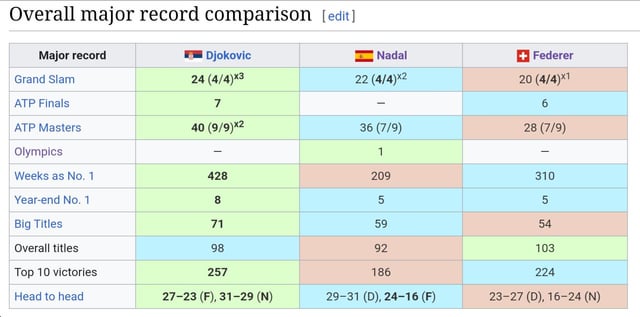
On paper, Novak Djokovic’s case for GOAT status is compelling, if not outright irrefutable. His record-breaking achievements paint a picture of relentless dominance and unparalleled consistency across all surfaces. Djokovic stands alone in men’s tennis with an astounding 24 Grand Slam singles titles, a feat that firmly places him ahead of Rafael Nadal’s 22 and Roger Federer’s 20. But his statistical supremacy extends far beyond just major trophies.
He holds the record for the most weeks spent as ATP World No. 1, surpassing Federer's previous benchmark, and he is the only male player in the Open Era to achieve a double career Grand Slam – winning each major at least twice. Furthermore, Djokovic leads both Nadal and Federer in their head-to-head encounters, a crucial metric given the intensity of their rivalries. Against Nadal, he holds a 30-29 advantage, and against Federer, it's 27-23. These numbers highlight not just his individual brilliance but also his ability to consistently overcome his most formidable opponents on the biggest stages.
Even at 38, Djokovic continues to defy age, as evidenced by his unexpected run to the 2026 Australian Open final, proving he's still adding chapters to his illustrious career. This longevity and sustained excellence, as acknowledged by Rafael Nadal himself who cited Djokovic's relative injury-free career as a key factor, are testament to his dedication and physical prowess. Young stars like Carlos Alcaraz also recognize this statistical might. Asked to name the sport's best-ever player, Alcaraz told the ATP Tour, "As far as numbers, it's Novak Djokovic without a doubt." While fans may hold emotional attachments to different players, the objective metrics undeniably bolster Djokovic's claim in the
Djokovic's GOAT Case: Stats vs. Legacy in the Nadal, Federer Debate.
Beyond the Trophies: The Intangibles of Federer and Nadal
While Djokovic’s numerical achievements are undeniable, the GOAT debate often ventures into more subjective territory, where the legacies of Roger Federer and Rafael Nadal truly shine. Figures like Ivan Ljubičić, Federer’s former coach and a high-performance director at the French Tennis Federation, argue that greatness isn't solely about counting trophies. For Ljubičić, Federer and Nadal "changed the sport in ways that are still being felt across generations of players and fans."
Roger Federer's elegant, seemingly effortless style captivated audiences worldwide, drawing in millions of new fans with his balletic movement and sublime artistry. He embodied grace under pressure, becoming a global icon whose aura transcended the tennis court. Rafael Nadal, on the other hand, became synonymous with unparalleled grit, mental fortitude, and a relentless fighting spirit. His gladiatorial battles on clay, particularly at Roland Garros where he holds an astonishing 14 titles, showcased a raw passion and intensity that few could match. The fierce yet respectful rivalry between Federer and Nadal, often referred to as 'Fedal,' became one of sports' most compelling narratives, elevating tennis to new heights of popularity and generating a captivating drama that was impossible to ignore.
These intangible qualities – the cultural pull, the captivating style of play, the emotional connection with fans, and the profound influence on the sport's global appeal – form a crucial part of their GOAT argument. For many, the impact Federer and Nadal had on the sport's aesthetics and popularity defines their greatness just as much, if not more, than their individual statistics. This perspective acknowledges that true legendary status isn't just about what you win, but *how* you play, and the lasting impression you leave on the hearts and minds of fans.
The Young Guns Weigh In: Alcaraz's Perspective
The perspective of the younger generation of tennis stars offers unique insights into the
Alcaraz, Coaches Reignite Djokovic-Nadal GOAT Debate. Carlos Alcaraz, often touted as the future face of men's tennis, has explicitly weighed in on the discussion, providing a clear demarcation between statistical dominance and aspirational goals. As mentioned earlier, Alcaraz has stated that "as far as numbers, it's Novak Djokovic without a doubt." This acknowledgement from a player who regularly challenges Djokovic on court, and who himself has Grand Slam titles to his name, carries significant weight.
However, Alcaraz's ambition isn't solely defined by chasing Djokovic's monumental records. When asked about breaking Djokovic's 24 Grand Slam titles, Alcaraz responded with a dose of realism: "I know it is almost impossible to break Novak’s records, but I’m playing tennis for myself, for joy and I want to do great things. I want to be part of tennis history." This statement reflects a profound respect for Djokovic's achievements while simultaneously highlighting a personal journey driven by passion rather than solely statistical conquest.
Alcaraz's comments are telling. They confirm that even for the game's brightest young talents, Djokovic's statistical benchmark is viewed as incredibly, almost impossibly, high. Yet, they also subtly emphasize that the essence of tennis, for many, isn't just about out-winning everyone, but about creating memorable moments, pursuing personal excellence, and leaving a unique mark on the sport. His perspective encapsulates the balance many feel in the
djokovic nadal goat debate: an objective acknowledgment of Djokovic's supremacy in numbers, coupled with an appreciation for the broader impact and personal legacy.
Why the Debate Endures (And Why It's Good for Tennis)
The tenacious persistence of the
djokovic nadal goat debate, even in the face of overwhelming statistical evidence for Djokovic, is precisely what makes it so fascinating and, arguably, beneficial for the sport. It endures because greatness in tennis, unlike some other sports, is evaluated through a multifaceted lens. It’s not just about titles, but also about artistry, temperament, sportsmanship, innovation, and global appeal. Fans develop deep, often emotional, connections to players who embody values or styles they admire, making objective analysis challenging and subjective preferences powerful.
Moreover, the fact that Djokovic is still actively playing and adding to his legacy means the "final chapter" of his story hasn't been written yet. Every new record, every new deep run in a major, fuels further discussion and makes it harder to put a definitive stamp on the debate. This ongoing narrative keeps the tennis world buzzing, generates continuous engagement, and brings new fans into the conversation.
For fans, the enduring debate offers a rich opportunity to appreciate the unique contributions of three unparalleled athletes who collectively defined a truly golden era of tennis. Instead of striving for a single, definitive answer, perhaps the true value lies in celebrating the diverse forms of excellence they represent. It's a testament to the depth of their respective careers that arguments for any of them being the GOAT remain compelling, depending on the criteria one values most. Engaging respectfully in this discussion, while acknowledging the merits of each player, enriches our understanding and enjoyment of the sport.
Conclusion
Novak Djokovic's statistical superiority, marked by his record 24 Grand Slam titles and unprecedented time at world No. 1, presents an undeniable case for his GOAT status in men's tennis. His relentless pursuit of excellence and sustained longevity have allowed him to carve out a legacy that, by numbers alone, stands above all others. Yet, the fervent debate with Rafael Nadal and Roger Federer persists because greatness in tennis extends beyond mere statistics. The cultural impact, stylistic allure, and profound influence of Federer and Nadal on the sport's global appeal resonate deeply with fans and pundits alike, ensuring their places in the pantheon of legends are equally revered. As Djokovic continues to write his extraordinary story, the conversation about the greatest of all time will undoubtedly evolve, but one thing is certain: this golden era of tennis, defined by three titans, will forever be etched into the annals of sporting history.